
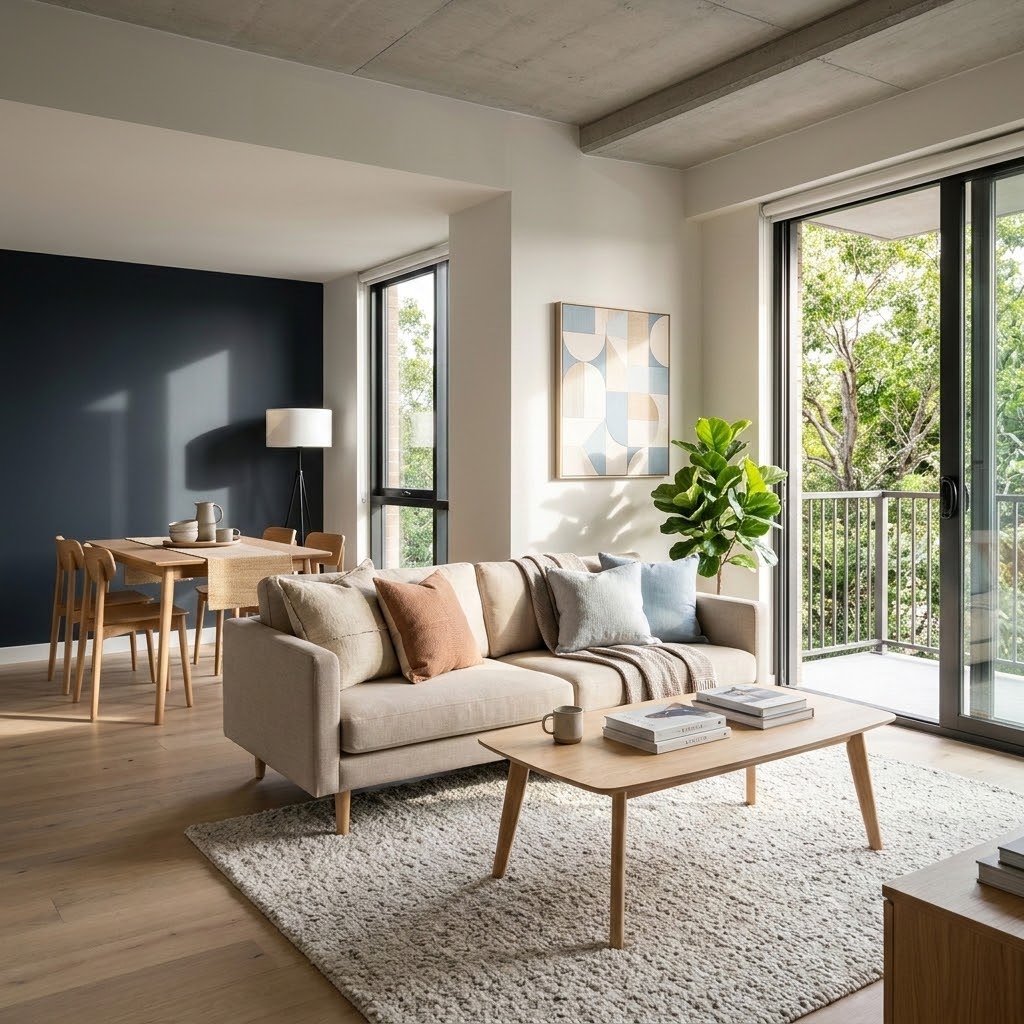
What if the value of staging a three-bedroom home lies less in filling every room and more in helping buyers picture themselves living there? The cost to stage a three-bedroom house in Sydney depends on the home’s condition and layout, how much furniture it needs, and how long the pieces are required. The scope matters too: styling a vacant home is different from working with the furniture you already have.
Before deciding whether staging suits your campaign, clarify what the quote covers: which rooms are included, what furniture and accessories are supplied, and how long they remain in the home. Also consider whether the proposed styling complements the property’s character and helps present its key spaces clearly.
This guide explains what shapes the scope of physical styling, how full and partial styling differ, and what to compare in a quote. It also outlines how to weigh the presentation against the investment, so you can make a considered decision for your home.
Key Takeaways
Staging can help buyers understand a home’s layout and imagine living there, especially in listing photography.
Full styling suits vacant homes, while partial styling can make thoughtful use of furniture already in place.
The home’s condition, layout, furniture needs and hire period all influence the scope of a staging quote.
Compare quotes by looking at what’s included, how long the hire lasts and what happens when the campaign runs longer.
When you’re weighing value, consider which rooms most shape a buyer’s first impression and how well the styling suits your home.
Table of Contents
Is home staging worth it?
Staging can help buyers understand a home’s layout, imagine living there and connect with its listing photos. Whether it suits your campaign depends on the property’s presentation and the rooms that need attention.
Sale Price, Speed and Listing Photos
Staging gives rooms a clear purpose, helping buyers see how a three-bedroom home could work for them. This matters online, where listing photography often creates the first impression before an inspection.
In a vacant home, furniture can show the scale of a living area and define how people move between rooms. In an occupied home, editing existing pieces and adding considered details can create more cohesive photographs. Both approaches can help key features stand out in the listing.
Staging supports a home’s presentation, but it cannot set the pace of a sale. A considered campaign may help buyers connect with the property, while the result also depends on factors such as pricing, location and buyer demand. Treat styling as one part of the sale strategy, not a promise about offers or time on market.
Staging Costs and Potential Returns
To assess the investment, compare the styling scope with the presentation goals. A three-bedroom home needing furniture throughout requires a different plan from one where only selected rooms need attention.
For example, imagine a vacant home with an undefined living area and a main bedroom that looks small in photographs. Styling those spaces can help buyers understand their function and scale. The value is a clearer presentation, not a guaranteed change to the final sale price.
Price reductions are another campaign decision, but they address a different issue. A reduction changes the advertised price; staging changes how the property is presented. If buyer feedback points to a confusing layout or an emotionally flat listing, improving the presentation may be more relevant than adjusting the asking price.
Consider both choices against the same goal: helping suitable buyers see the home’s strengths. The right balance depends on the property, campaign feedback and gaps in its presentation.
Full-Staging Prices by Bedroom Count
Australian full-staging packages vary by bedroom count because the amount of furniture and the rooms being styled affect the scope. Published packages distinguish between one-, two-, three- and four-bedroom homes, rather than treating every property alike.
A three-bedroom home sits between smaller apartments and larger family houses, but the bedroom count does not tell the whole story. A second living area, generous dining zone or unusual layout can add work beyond the bedrooms. A compact home may need fewer pieces than a spacious one with several separate entertaining areas.
Package comparisons are most useful when they describe the same rooms, furniture provision and hire period. Australian staging packages commonly cover five to six weeks, so the campaign timeline matters too. Check how the quoted scope relates to your home’s layout and intended presentation, rather than comparing bedroom labels alone.
This context helps you decide whether full-home styling or selected styling is a better fit. The right scope addresses the home’s specific presentation needs, whether it is vacant or occupied.
What staging packages include
A styling package sets out the rooms and work planned for your selling campaign. For a three-bedroom home in Sydney, the scope may range from selected additions to full-home styling.
With full staging, furniture, rugs, artwork and decorative accessories can give key rooms a clear purpose. The team considers how each piece fits the home, from the living area to the bedrooms, so the result feels connected rather than assembled room by room. Delivery, placement and collection may also form part of the arrangement. Hire periods vary, so the agreed dates matter as much as the pieces themselves.
BESPOKE STYLE builds on what is already in the home, adding or repositioning selected pieces where the arrangement needs more focus. For example, a furnished lounge might benefit from a clearer layout, while an empty dining area needs a focal point. The work involved, rather than bedroom count alone, shapes the scope.
A pre-sale consultation can identify which rooms need attention and how existing furniture could support the listing. Amazema also offers PHOTO SHOOT STYLE for homes with children or tenants: the home is styled for a photographer’s shoot, then the styling pieces are removed. Physical styling and digitally adding furniture to listing images serve different purposes, so consider how buyers will see the home.
Sydney staging cost also varies with property size and layout. A two-bedroom apartment, a three-bedroom house and a larger home with multiple living zones have different furnishing needs. Extra rooms, stairs, access and the hire period can affect the scope. Across the Northern Beaches and North Shore, each home’s layout and access can call for a different furniture plan.
Before the staging team arrives, clear personal belongings, remove everyday clutter and make access to each room straightforward. Finish any cleaning or minor maintenance first, and leave the spaces ready for furniture placement. In an occupied home, keep the items that support the planned look accessible. A prepared home helps the team focus on placement and styling, rather than moving around boxes or unfinished tasks.
For a tailored package, clarify which rooms are covered, what furniture and styling are included, the hire period, and what collection involves. If you’d like to discuss the right scope for your home, get a free quote.
How Much Does Property Styling Cost in Sydney?
A Sydney styling quote reflects the rooms, furniture and work required, not just the bedroom count. Compare the scope with your campaign’s presentation needs to understand what the investment covers.
Worked Sydney Cost Comparison
Picture two three-bedroom homes preparing for sale. The first is vacant, with a living room, dining area and three bedrooms needing furniture and finishing touches. The second is occupied, with usable furniture already in place but a dining area and main bedroom needing more definition.
The first calls for a broader furniture and styling scope. The second may need selected additions and careful editing. Their bedroom count matches, but the work differs. Compare each quote by rooms covered, furniture provided, delivery, styling, collection and hire period, rather than treating the headline figure as the whole comparison.
For a practical comparison, write down the campaign’s presentation priorities first. A clearly defined living zone may matter more than furnishing a spare room. Then check whether each proposed scope addresses those priorities.
Property Size and Type
Property size affects how much furniture is needed, while the property type shapes what will fit. A three-bedroom apartment may have a compact living-dining zone; a detached house may include separate living spaces that need distinct purposes.
Across Sydney’s Northern Beaches and North Shore, compare homes by layout and access as well as bedroom count. A townhouse with stairs and a standalone house with open-plan living can involve different placement needs. A vacant property also needs more furnishings than an occupied one where existing pieces can be incorporated.
These details explain why two homes with the same number of bedrooms can receive different quotes. The styling scope should match the property, not a generic room count.
Tax treatment is separate from the styling scope. Keep the quote, invoice and sale records together, then seek advice about how the expense applies to your circumstances. Styling work and renovations are not interchangeable categories, so describe the work accurately when discussing tax treatment.
For example, furniture used temporarily for a sale campaign differs from permanent work such as replacing a kitchen. Keep those items distinct in your records. The quote should make clear which services relate to presentation and which relate to lasting changes.
Before comparing quotes, note the rooms and styling work included, the campaign period, and how the installation and removal are arranged. A quote covering a dining area and living room is not directly comparable with one covering every bedroom and living space. Compare scope first, then the quoted investment.
If you’d like a quote shaped around your home and campaign, get a free quote.
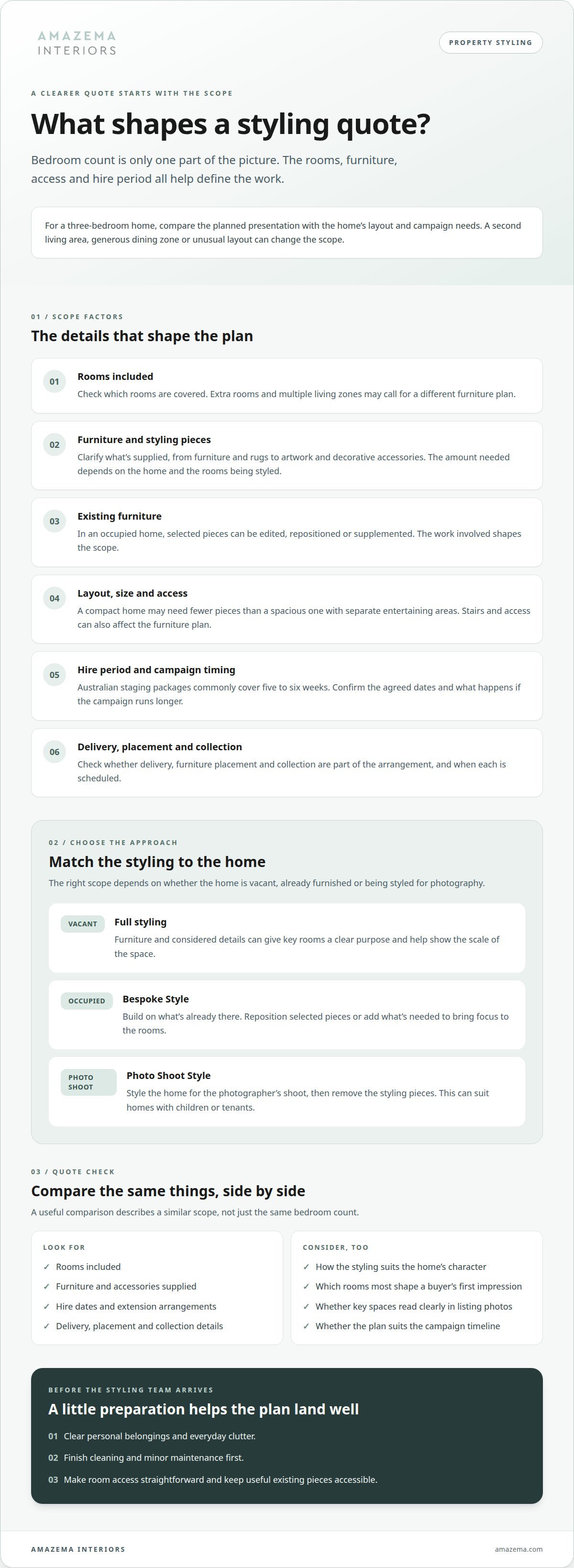
Comparing quotes and contract terms
Sydney home-staging furniture hire usually runs for four to six weeks. That period should cover installation, photography, inspections and the planned campaign, so check the start and collection dates against your calendar.
An accurate quote starts with the property’s layout and the rooms included. A three-bedroom house with separate living and dining areas needs a different furniture plan from an apartment with open-plan living. The quote should make clear which pieces are supplied, what styling work is included, and whether delivery, installation and collection are covered.
Compare the written scope, not just the final figure. Two quotes may use the same label but cover different rooms or campaign periods. A useful comparison records:
Which rooms and furniture pieces are included.
Whether delivery, installation, styling and collection are covered.
The hire period, its start date and its scheduled end date.
How an extension is charged if the campaign continues.
Any access or property conditions that affect delivery.
Contract terms matter if the sale campaign changes. Australian staging packages can be extended beyond their usual hire period at an additional weekly cost. Confirm how an extension is calculated, who arranges collection, and what happens if settlement or the campaign date shifts. Clear dates help avoid confusion when furniture is still in place after the original end date.
For a fair pricing comparison, request itemised quotes from two or three Sydney stylists. Send each the same property details, room list and campaign timing. If one quote includes a living room and main bedroom, while another includes every room, the totals won’t represent the same scope. Consistent information makes differences easier to understand.
The booking process usually follows a simple sequence: the property is assessed, the rooms and pieces are agreed, then dates are scheduled for installation and collection. Ideally, book the styling team three to four weeks before the first open house. That gives the campaign plan time to account for preparation, furniture placement and listing photography.
Before accepting a quote, read the included work alongside the campaign dates. A vacant house, an occupied home and an apartment can each have different access needs. Stairs, lifts, parking and narrow entryways may affect how furniture is brought into the rooms. Include those details in the property brief so the plan reflects the home.
Make sure the agreed scope matches the finished plan. If a room or styling piece changes, record the adjustment and any effect on the campaign dates. A written agreement gives you a clear reference throughout the sale campaign.
Physical styling costs for three-bedroom Sydney homes
For a three-bedroom Sydney house, full furniture hire depends on the rooms styled, the pieces selected, access and the hire period. The exact figure for your home is set out in a quote shaped around its layout and campaign.
Physical styling places furniture and accessories in the property, rather than adding them digitally to listing photos. A vacant home may need furnishings for its living area, dining space and bedrooms. An occupied home may already have useful pieces, with styling focused on rooms that feel unfinished or crowded.
That difference changes the scope. A furnished lounge with a clear layout may need selected additions, while an empty living room needs pieces that establish its purpose and scale. A dining setting can also show how the space works for meals or entertaining. The presentation should feel considered and connected across the home.
If you want to focus the styling scope, prioritise the rooms that shape the first impression. Living areas, the main bedroom and the kitchen often anchor a property’s presentation. A dining table can clarify an open-plan zone, while carefully chosen accessories can bring warmth to a bare bedroom. The aim is not to fill every corner, but to show how each important space can be used.
The property itself matters, too. A compact three-bedroom home has different furniture needs from a house with generous rooms and separate living areas. Ceiling height, natural light, access and existing finishes can affect which pieces suit the home. In an older Australian house, for instance, furniture and colours can respect its character rather than compete with it.
Physical styling also involves practical considerations beyond the objects in each room. Delivery access, stairs, narrow hallways and the placement of larger pieces can shape the installation plan. The campaign period should account for photography and inspections, so the styled rooms are ready when buyers first see the listing.
To understand a quote, look for a clear list of the rooms and styling work included, along with the agreed campaign dates. Then compare the proposed approach with the home’s actual needs. COMPLETE STYLE styles a vacant property, while BESPOKE STYLE adds customised styling to an occupied home.
For a quote tailored to your home’s rooms, furniture needs and campaign, get a free quote.
There’s no single set cost; the price is determined by a quote based on the home’s layout, styling scope and hire period.
Amazema Interiors
Amazema Interiors can shape a styling plan around your home’s layout, existing furniture and campaign goals. For a vacant three-bedroom house, COMPLETE STYLE provides full-home styling. If you’re living in the home, BESPOKE STYLE can build on selected existing pieces.
The right scope depends on what buyers will see, from the living areas to the smaller details that make a room feel complete. Amazema Interiors considers each home’s character and helps you understand which styling approach best fits its presentation needs.
If you’re preparing to sell and would like to discuss styling your home, contact Amazema Interiors to get a free quote.
Shape a styling plan around your home
Understanding the cost to stage a three-bedroom house in Sydney is a useful starting point. Next, decide what you want buyers to notice first and how each room can support that impression. A thoughtful plan should suit the home, not feel like a template.
Think about the character you want to preserve, the spaces that need more definition and the impression you want buyers to take away. These priorities give your styling conversation a clear direction, whether the home is vacant or still lived in. Considered details can make the presentation feel cohesive, from the first photograph through to an inspection.
If you’re ready to talk through your home and campaign, get a free quote. A considered approach can help your property feel welcoming, memorable and ready to meet its next owners.
Frequently Asked Questions
What is house staging?
House staging prepares a property for sale by arranging furnishings and decorative details to present its spaces clearly. It can help buyers understand how a room might function, rather than leaving an empty space open to interpretation. For instance, a dining setting can show where a table fits, while a bed helps establish the scale and purpose of a main bedroom.
What’s included, and what makes the bill grow?
Physical styling can include furniture and decorative pieces for the rooms being presented. The scope grows when more spaces need attention, the home has additional living zones, or access makes installation more involved. A vacant house and an occupied home with usable furnishings need different plans, so the room list is central to understanding the quote.
Are there hidden fees I should ask about?
Rather than assume a charge is hidden, look for a written breakdown of the agreed work and any circumstances that could change it. For example, a campaign running beyond its planned end may require an extension arrangement. Make sure the terms explain the hire dates, collection, and how changes to the campaign affect the agreement. Clear documentation helps you understand the full commitment before proceeding.
Full, partial, consultation or virtual: what’s the difference?
Full staging furnishes a vacant home for presentation, while partial styling works with existing furnishings and adds or adjusts pieces where needed. A consultation focuses on recommendations and priorities, rather than furnishing the property. Virtual staging adds furniture digitally to listing images, so buyers see an edited representation rather than physical furnishings during an inspection. These options suit different homes and campaign needs.
How does property staging work in practice?
The process starts with understanding the property, its existing furnishings and the campaign’s presentation needs. Amazema then plans the styling scope around the home. Before installation, prepare the rooms for the agreed work. Once styled, they are ready for photography and buyer inspections. At the end of the agreed period, the styling pieces are removed.
What is the average cost to stage a three-bedroom house in Sydney?
There isn’t one average that reflects every three-bedroom Sydney home or staging scope. A vacant house requiring several furnished spaces differs from an occupied property needing selected additions. For Amazema Interiors, styling is bespoke and quoted individually, based on the property and presentation plan. Compare quotes by the rooms and work covered, rather than relying on a broad average that may describe a different home.
What is included in home staging packages in Sydney?
Package inclusions depend on the agreed scope. Physical styling can cover furniture and decorative pieces for selected rooms, along with the work involved in presenting them in the home. In a living-dining area, for example, furniture can define each zone and accessories can bring the arrangement together. Review the proposal to see which rooms and styling work are included.
What are Sydney home staging costs by property size or suburb?
Property size is only one part of the scope. A home with several distinct living areas can need more furnishings than a compact layout with the same bedroom count. Suburb and property access can also shape delivery and installation planning. Across the Northern Beaches and North Shore, the home’s layout, condition, existing furniture and campaign requirements are more useful comparison points than suburb name alone.